
What to do with AI
Thank you for having me in your MCTP course. I wanted to cover practical aspects of what you can do with AI given your unique position.
I believe that there are 5 dimensions to this, and depending on your goals, you can start on 1, 2 or all 5. I've also included relevant resources based on the questions that came up in the session and the lunch table.
Pick One Workflow
Choose one task this week: drafting letters, meeting minutes, form-filling, or document checking.
Add One Check
Before trusting output, make the system compare names, dates, fields, or source documents.
Look For One Bottleneck
Ask where files stall, where inspection is weak, or where citizens struggle with forms.
Set One Red Line
Be explicit about what AI may assist with and what still requires human judgment.
Write One Standard
Document the exact prompt, files, checks, and escalation rule so others can reuse it safely.
Measure One Result
Track time saved, error rate, turnaround time, or citizen effort so adoption is evidence-based.
Level 1 • Personal
First, become a better operator.
The first level is not a ministry-wide platform. It is personal fluency. Learn how to direct an AI well, how to constrain it, and how to make it show its work before you ask it to touch larger systems.
The five habits below are practical habits of use, not theory.
1 / 5
1 / 5
Level 2 • Administrative
Then use it on paperwork, language, and routine mechanics.
Administrative work is where AI becomes immediately practical. It is particularly strong where the job is repetitive, multilingual, document-heavy, and still dependent on people manually moving text from one format to another.
This does not mean “automate everything on day one.” It means finding processes where humans can dictate, lightly edit, verify, and approve while the system quietly carries the mechanical load.
Level 3 • Transformational
Then redesign the process itself.
The real leap comes when AI is not only speeding up a workflow, but supervising it, surfacing bottlenecks, and helping rewrite the underlying rules. At that point, your department’s functioning becomes inspectable data.
This is where leadership matters most. These are not small productivity hacks. These are projects that change how a system notices delay, conflict, and preventable failure.
1 / 5
1 / 5
Level 4 • Strategic
Then ask where India stands in the new economy.
The strategic story is not written yet. One narrative says a few giant model labs will win and everyone else will rent intelligence from them. But there is another possibility: a world of many models, routing layers, orchestration systems, and domain-specific agent stacks.
India should not think only in terms of catching up to a frontier snapshot. It should think about building systems that fit our scale, our institutions, our languages, our constraints, and our need to make citizens more capable.
Level 5 • Risks and Harms
Finally, keep the threat model in view.
A serious AI agenda has to hold two truths at once: these systems are increasingly useful, and they also create new harms at individual, institutional, and sovereign scale. If adoption accelerates, risk management has to mature with it.
The Indian risk surface includes a particular vulnerability: abundant cheap data, abundant attention, and large populations available to manipulation experiments at scale.
1 / 5
Closing
The path is simple, even if the technology is not.
Start personal. Move into administrative productivity. Redesign the process where the payoff is large. Think strategically about India’s position. And at every level, keep the risks visible.
The point is neither blind optimism nor blanket fear. The point is to become capable enough to use AI where it helps, shape it where it matters, and defend society where it threatens harm.
Use
Prompt better. Give tools. Build skills. Verify outputs.
Apply
Start with translation, documentation, checks, and meeting workflows.
Redesign
Use AI to supervise systems, simplify rules, and monitor proactively.
Position
Think in ecosystems, infrastructure, orchestration, and citizens.
Protect
Treat attention, sovereignty, and synthetic influence as first-class risks.
Resources
If you want to keep going, start here.
These are the books, essays, and trackers most worth reading after this talk. They give you a practical base: cyber risk, the history of modern AI, alignment and human values, beneficial abundance, and the state of local models you can run offline.
Books and Essays
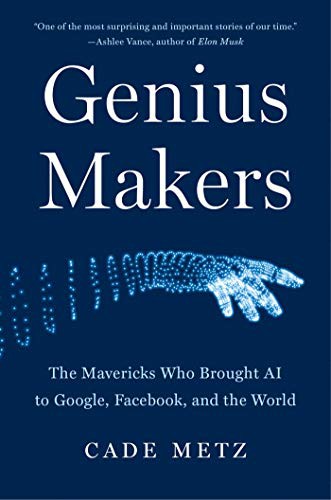
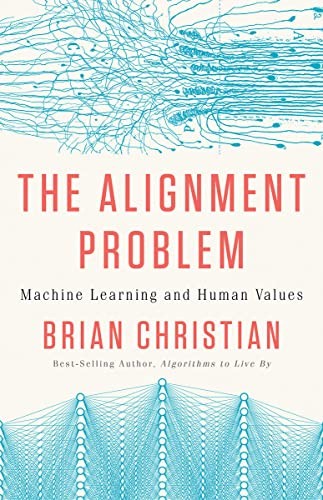
Track the Field
Slides: the Part 1 deck is available at
lbs.sthaan.ai/slides.
For more details: reach out on tanuj@sthaan.ai or +91 98671 04169.
For more details: reach out on tanuj@sthaan.ai or +91 98671 04169.